
Intention and Story: What Makes Surf Media Resonant

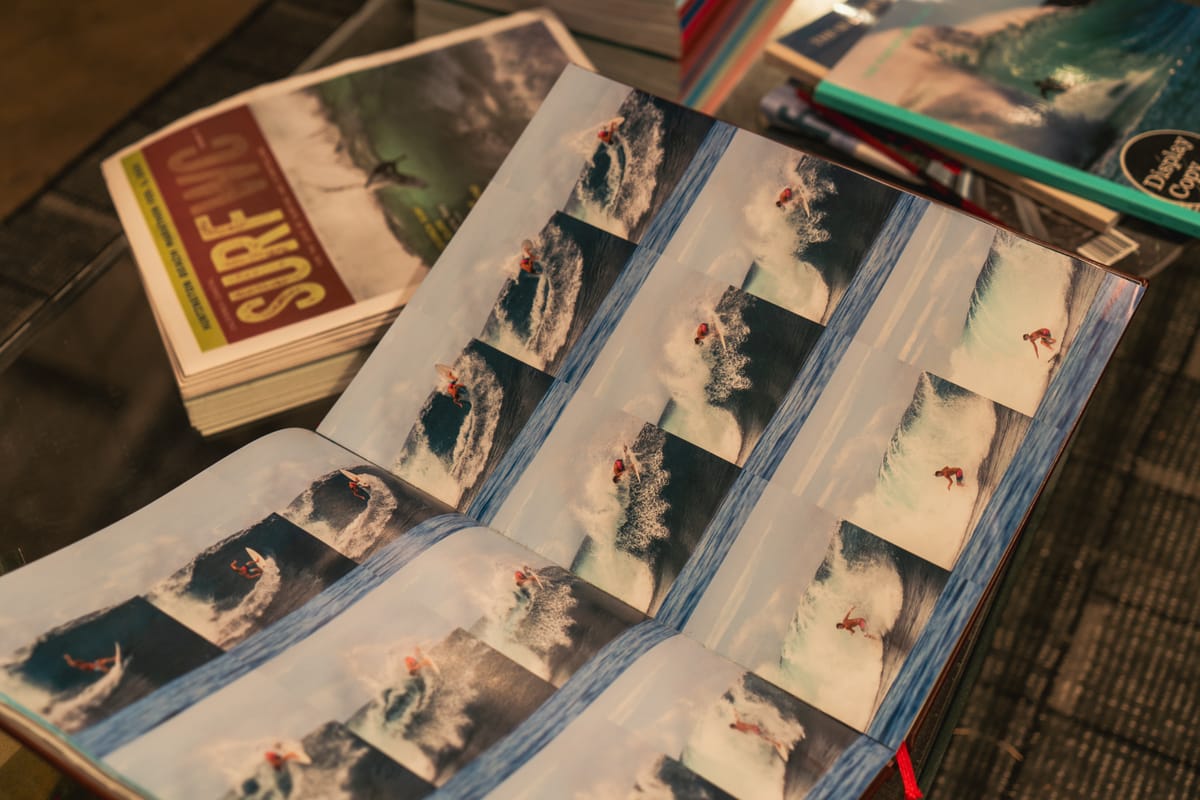
Surf media has never been more available, but so easy to forget.
Over the years surf media has changed drastically. There has been the slow fall of print and magazines, films seeming fewer and farther between, and the massive rise of social media. Surf media hasn’t lost its soul at all, but it seems as though it has stopped prioritizing story.
In the days when media was less accessible, there was a much higher standard and no lack of intention. Surfer Magazine was the first of its kind. Founded in 1960 by John Severson, it featured original photos and little writing content. Tracks Magazine, founded in 1970, was created as a counter-culture alternative to the pre-existing magazines. These magazines were only published a few times a year. This delayed access meant a high level of anticipation. The content had story. This isn’t to say older media was better, just more curated. The curation of old media mattered because choices had to be made. Filler content was nonexistent. Everything had its purpose. Photos, writing, and films had to justify why they belonged in front of the viewer’s eyes. The results weren’t always perfect, but they told a story and had intention. This intention gave surf media weight.
The biggest change in surf media today is how digital and accessible it has become. Jamie Brisick, former professional surfer and current editor of The Surfer’s Journal, has seen firsthand just how much surf media has changed over the years. “Digital media has made it to where there’s an infinite amount of real estate,” Brisick said. If everything can be published, nothing has to earn its place. When standards stop being enforced whether it be by space or deadlines, they become optional. The popularization of surf media has opened the industry to many new voices and perspectives. But along with the rise of these new voices has come an environment that favors volume. Now, it seems like all that matters is attention.

With the rise of social media, the algorithms demand short-form content. Some social media platforms simply don’t support longer formats. Also, twelve-second surf cam clips don’t carry enough weight to be remembered. It’s easy to watch them, but even easier to forget them. Story requires commitment from both the creator and the viewer. Older feature films demanded a viewer’s full attention. Today with all of the fragmentation on social media, very little is required of the viewer. Short clips are convenient and often impressive, but they simply don’t provide the context that made surf media so resonant to begin with.
Modern surf media also succeeds in meaningful ways. “We’ve gotten smarter in a lot of ways,” Brisick said, noting that to pass the smell test, media must work harder. As a result surfers are much more critical of the media they often see today. They’re much quicker to recognize when something doesn’t fit. That skepticism within the community has been quietly raising the bar for what gets their attention. Oftentimes the most compelling media comes from smaller crews who are still making great films without the need for everyone to know their name. When modern surf media works it’s because it has value that truly means something to its audience.
The most memorable surf media usually isn’t the loudest or most viewed, it’s the work that has meaning. Smaller crews, independent films, and long-form articles prioritize that intention. In an ever-changing media landscape that rewards speed, surf media works best when it slows down enough to mean something.

Surf media functions as a way to bring surfers together. Regardless of the abundance of clips on Instagram, it keeps people connected. While it might seem to some that the community has lost its patience, the tradeoff is immediacy and new voices that continue to expand surf media in meaningful ways. Although the way media is consumed shapes what gets made, the different formats allow for different priorities. There’s a little something for everyone. Great podcasts, long form articles, and fragments. Meaningful work is still happening every day. Value determines quality.
Brisick defined good surf media in one word, “honest.” Honesty has nothing to do with print versus digital or long versus short form. Honesty shows that good surf media can live anywhere. In the end, that’s what matters.